


Gout
Contents
Overview
Increased Risk Factors
Foods High In Purines
Prevention
Treatment
Overview
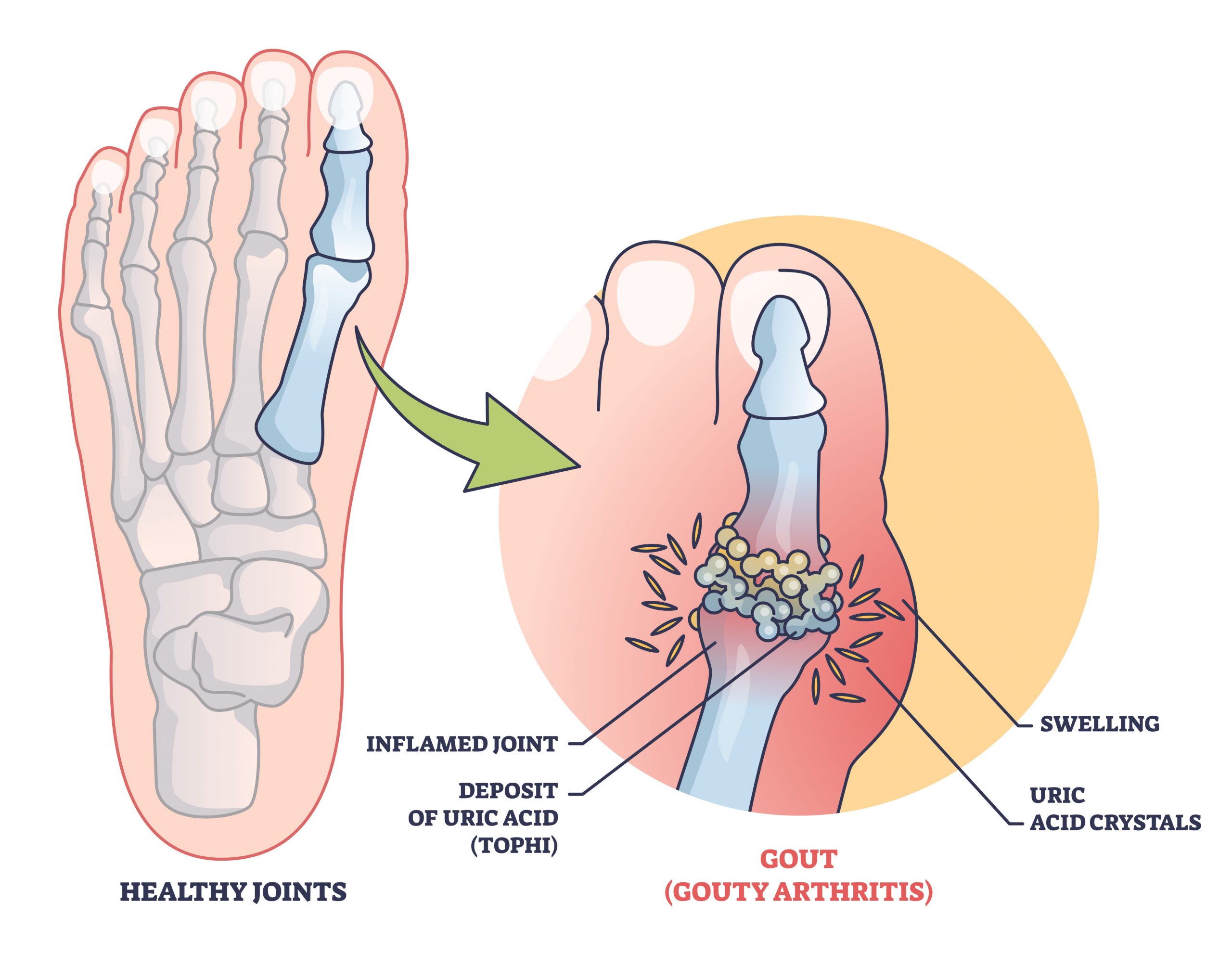
Gout is an inflammatory disorder caused by the buildup of excess uric acid in soft tissue or within a joint. Uric acid is made by the body when processing purines. Purines can occur naturally in the body and are found in some foods. Uric acid passes through the kidneys and is excreted from the body in urine. When levels become high the uric acid can crystallize in joints and tissues. These crystals are sharp and cause a severe inflammatory response and pain. Gout most commonly affects the great toe joint but can affect other parts of the foot or extremities.
Some people have a genetic predisposition to accumulate uric acid in the body. Some medications and health conditions, such as kidney disease, diabetic ketoacidosis, and insulin resistance, can also contribute to elevated uric acid levels. Eating foods or drinking beverages high in purines, which the body converts to uric acid, is a major risk factor.
Gout attacks are typically characterized by swelling, redness, increased skin temperature, and intense pain to the joint. Over time, severe gout can cause arthritis and damage to the joint or tophi. Tophi are hard nodules or bumps composed of monosodium urate crystals in the soft tissues and joints. These nodules are evidence of uncontrolled gout.
Increased Risk Factors
• Aspirin, niacin, and some diuretics, obesity can increase the risk
• Some diuretics (thiazides), cyclosporines, low dose aspirin
• Diet high in purines
Foods High In Purines
• Most seafood
• Shellfish (scallops, shrimp, crab, lobster, scallops, mussels, oysters)
• Some fish (anchovies, sardines, herring, codfish, trout, tuna, haddock)– Salmon is fairly low in purines and often safe to eat in moderation
• Meats
• Red meat (beef, veal, lamb, pork, ham, bacon)
• Organ meats (liver, kidney, sweetbreads, tripe, etc…)
• Game meats (goose, duck, venison)
• Turkey
• Gravy
• Alcohol (wine, beer, distilled alcohol)
• High fructose corn syrup, sugar, and fructose (candy, pastries, soda, fruit juices), avoid simple carbohydrates
• Highly processed foods
Prevention
• Dietary restrictions:
• Avoid foods high in purines
• Avoid high fat foods. Saturated fats decrease the body’s ability to process and remove uric acid.
• Moderation. Smaller portions are often tolerated better than larger amounts of the same food.
• Keep a food diary. Tracking everything being eaten shortly before an attack can help you identify your personal food triggers.
• Good hydration
• Weight loss
Treatment
For chronic cases uric acid lowering medications can be helpful, both in controlling uric acid levels and eliminating tophi. These should not be started during an acute attack as they can make the attack worse.
For acute flareups ice, elevation, rest, NSAIDs, medication (colchicine), steroid injection, good hydration, tart cherry juice, coffee, and vitamin C can be helpful. Avoid grapefruit while taking colchicine as the grapefruit can interfere with your body’s ability to process the medication.
X-rays and blood testing are recommended to confirm the diagnosis. If you are having significant pain and discomfort, redness, swelling, or increased skin temperature schedule an appointment now for an evaluation and discussion of your feet and treatment options.
Contents
Overview
Increased Risk Factors
Foods High In Purines
Prevention
Treatment
Call NOW for an Appointment: