

Soccer Cleats: Part 1 of 4 – Overview
Soccer Cleats: Part 2 of 4 – Fit
Recommended Guidelines for Football / Soccer Cleat Fit
When Should I See a Podiatrist?
Soccer Cleats: Part 3 of 4 – Female Fit
Soccer Cleats: Part 4 of 4 – Traction and Studs
Recommended Guidelines for Football / Soccer Cleat Fit:
IRL: Shoe fitting is best done in real life. It is difficult to ensure the best shoe size and comfort when buying shoes online. Nothing can replace physically trying a shoe on. We recommend supporting local businesses whenever possible.
Visit the shoe store after a workout: Increased blood flow to the muscles and impact force on the feet can cause them to temporarily swell and increase in volume.
Wear the socks you intend to wear while fitting the shoes: Different sock thicknesses will affect fit.
Stand: Shoe fit is different standing than seated. Stand up and walk around during the fitting process.
Shoe sizes are NOT standardized: They are only a suggested starting point when trying on a new pair of shoes. The size and width of shoe which fit you best will vary from brand to brand, from shoe model to shoe model, and from one design cycle to another. Foot size changes as we age, not just during adolescence, across the sexes. Focus on what fits and feels the best for your feet, not the number on the box. Do not buy oversized shoes to allow room to grow. Extra room in the shoe increases the risk of injury. Shoes must match the feet!
Length & Toe Room: Preference for space at the toes varies widely for players; some prefer a full thumb’s length, and some prefer no space at all. For good foot health we recommend keeping enough space at the toe box so that feet can lie naturally in the shoe and the toes fully transfer power to the ground! As a general rule, allow ⅜ to ½ inch between the longest toe and the end of the toe box. The toe box should have ample height and width to accommodate the toes. Toes should have room to wiggle at the front of the shoe. Do not jam them into the toe box. Comfort is key. On the other hand, be careful as too much space can cause feet to slip around in the shoe.
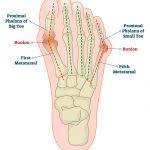
Width: Different players have different foot shapes and widths. Evaluate the width of the cleat to ensure a comfortable fit without unnecessary pressure points. Improper fit will lead to blisters, pressure points, increased foot fatigue and ingrown toenails. Individual needs will vary and will require cleats with a wider or narrower fit. A different upper on the same last will fit very differently. The widest part of the foot should match the widest part of the shoe. This is generally around the great toe joint and the fifth toe joint. Men and women have different shaped feet. Women’s feet are generally more triangular shaped than men’s, with a wider forefoot in relation to a narrower heel.
Flex: The ball of foot and “bend” of the toes should match the toe break or flex point of the shoe. This is point where the shoe is designed to flex naturally. Forcing the shoe to flex in a location it is not designed to will increase stress and strain on the foot.
Stud Placement: The great toe joint (metatarsophalangeal joint) is the primary pivot and propulsion point. The great toe joint stud should be placed next to, NOT directly under the joint. This will decrease stud pressure to the joint and decrease the stress and strain to the sesamoids and great toe joint and decrease the risk of injures to the joint such as turf toe.
Heel Fit: The heel should be snug and secure but not overly tight. A secure heel fit prevents slippage within the cleat and provides stability during rapid movements. There should be no slipping or lifting when walking, running, or cutting.
Comfort: Cleats should be comfortable. Wear test shoes in store to ensure fit and balanced, comfortable gait. There should be no pinching or pressure points anywhere on the foot. Shoes should not be painfully tight. Do not count on them becoming more comfortable as they “break in”. They should fit well from the beginning.
Inserts: If your feet require inserts or custom orthotics bring them with you and put them in the shoes throughout the fitting process. A removable sock liner is helpful when using inserts or custom orthotics. A glued in sock liner often leaves glue residue on the last when it is removed. Removing a softer sock liner will create less additional room in the shoe than removing a firmer sock liner.
If over the counter inserts or standard custom orthotics are not fitting well, are not comfortable, or not providing adequate support and protection in the shoe, consider having us manufacture a custom orthotic 3D printed to fit exactly your foot and inside your shoe. This service will require 3D modeling of your feet and leaving the cleat with us during the manufacturing process.
Choose cleats for the fit, NOT the logo, brand, or price tag! The proper soccer cleat Fitfit beats out brand, logo, and color every single time.
When Should I See a Podiatrist?
You know your body, and you know when something does not feel right. The big question is, when should you actually get it checked out? You should see a sports foot and ankle specialist and podiatrist for an evaluation if:
• You have had a significant injury.
• It has been a week or two after an injury and it is not calming down or improving, or if it is getting worse. These are clear signs it is time for an evaluation.
• You are dealing with ongoing swelling, limited movement, or pain which is affecting how you walk, run, or play.
• A joint feels unstable, or like it might give out. Do not try to push through it.
• Over the counter inserts or standard custom orthotics are not fitting well, are not comfortable, or are not providing adequate support and protection in the shoe, consider having us manufacture a custom orthotic 3D printed to fit your foot exactly. This service will require 3D modeling of your feet.
• Over the counter inserts or standard custom orthotics are not fitting well in your shoe, consider having us manufacture a custom orthotic 3D printed to fit inside your shoe exactly. This service will require 3D modeling of your feet and leaving the shoe with us during the manufacturing process.
• You would like to have your feet evaluated and discuss preventative care to help you achieve and stay at your goal performance level.
At Chugach Sports Foot and Ankle, we work with athletes and active individuals of all levels who want to return to activity and prevent injury. Schedule an appointment today and let us help get you back in the game!
Soccer Cleats: Part 1 of 4 – Overview
Soccer Cleats: Part 2 of 4 – Fit
Recommended Guidelines for Football / Soccer Cleat Fit
When Should I See a Podiatrist?
Soccer Cleats: Part 3 of 4 – Female Fit
Soccer Cleats: Part 4 of 4 – Traction and Studs