

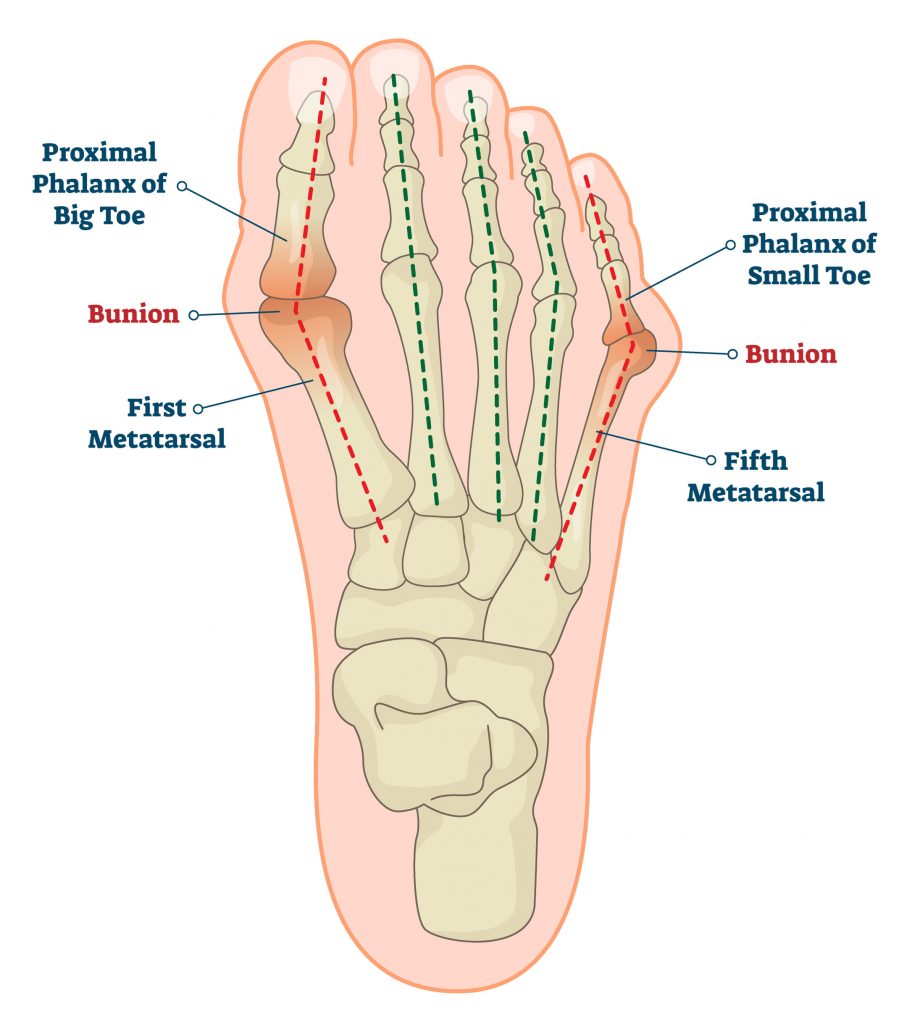
A popular misconception about bunions is they are just a bump or growth on the side of the foot, and shaving them down fixes them. Bunions are due to a malalignment of the bone just before the big toe joint (the first metatarsal), the joint itself, and the great toe. Bunions can also occur on the outside of the fifth toe joint. These are called bunionettes or Tailor’s bunions.
Because the bones are physically out of alignment, toe splints and straighteners are generally not super helpful. They can be painful to wear. Splints often do not fit well inside a shoe. Spacers and splints do not provide lasting improvement. As soon as they are removed any “correction” is eliminated.
Sometimes though spacers between the toes, or toe socks, can help reduce pain, particularly if the big toe is pushing on the second toe and there is pain between the two. Correct Toes style splints are generally more comfortable than other types of great toe splints and can be worn with shoes if they are wide enough. Spacers and splints are relatively inexpensive, so they are worth a try. You may be one of the few who find them helpful.
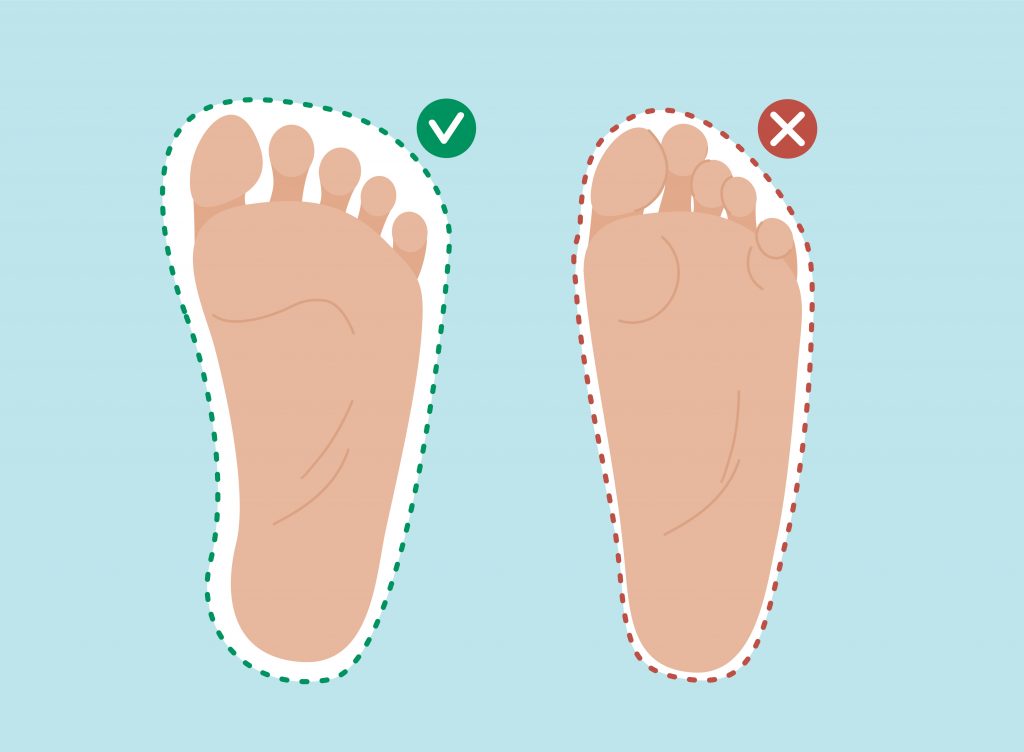
Wide shoes are recommended to minimize pressure from the shoes on the bunion. While improper shoes do not cause bunions, they do make them more symptomatic and painful. Custom orthotics can also be helpful with pain, particularly pain on the bottom of the forefoot. When done regularly foot strengthening exercises can be helpful.
If bunion pain is not adequately relieved with conservative measures surgical correction may be a good option. The goals of bunion surgery are to realign the big toe (hallux), the big toe joint (1st metatarsophalangeal joint) and the bone connecting the big toe to the foot (the first metatarsal), and to reduce pain. Depending on the type and size of the bunion this may be done by cutting and realigning the bones (osteotomy) or by a joint fusion (arthrodesis). Cutting and realigning the first metatarsal and great toe is done through small incisions (MIS or minimally invasive surgery) or through a longer incision allowing direct exposure to the area. Fusions are done either to the midfoot (a Lapidus procedure) or to the great toe joint.
You have probably seen advertisements for surgical device companies promoting their implants such as the Lapiplasty and Lapifuse for the Lapidus procedure, or the Prostep MIS for minimally invasive bunion surgery. While there are some benefits to different surgical implants, the more important concern is choosing the correct type of surgery for your unique foot.
• If you are having persistent pain or discomfort,
• If the bunion is beginning to limit physical activity or affect function,
• If the bunion is affecting your quality of life,
• If the bunion is causing the lesser toes to move out of alignment,
• If you would like to discuss the appropriate treatment options for your foot,
• Or if it is time for surgery,
Schedule an evaluation and consultation today!