

Plantar Fasciitis (Fasciopathy)
Contents
Overview
Causes
Symptoms
Treatment
Prevention
Overview
Plantar fasciitis is the most common cause of pain on the bottom (plantar side) of the heel. It is estimated 1 in 10 people will suffer from plantar fasciopathy at least once during their life. While it is commonly called plantar fasciitis, more accurate and better terminology would be plantar fasciopathy or plantar fasciosis.
- The “-itis” in plantar fasciitis refers to an inflammation of the fascia.
- Fasciosis is a degeneration of the fascia.
- Fasciopathy is a broader more encompassing term, indicating an abnormality or disorder of the fascia.
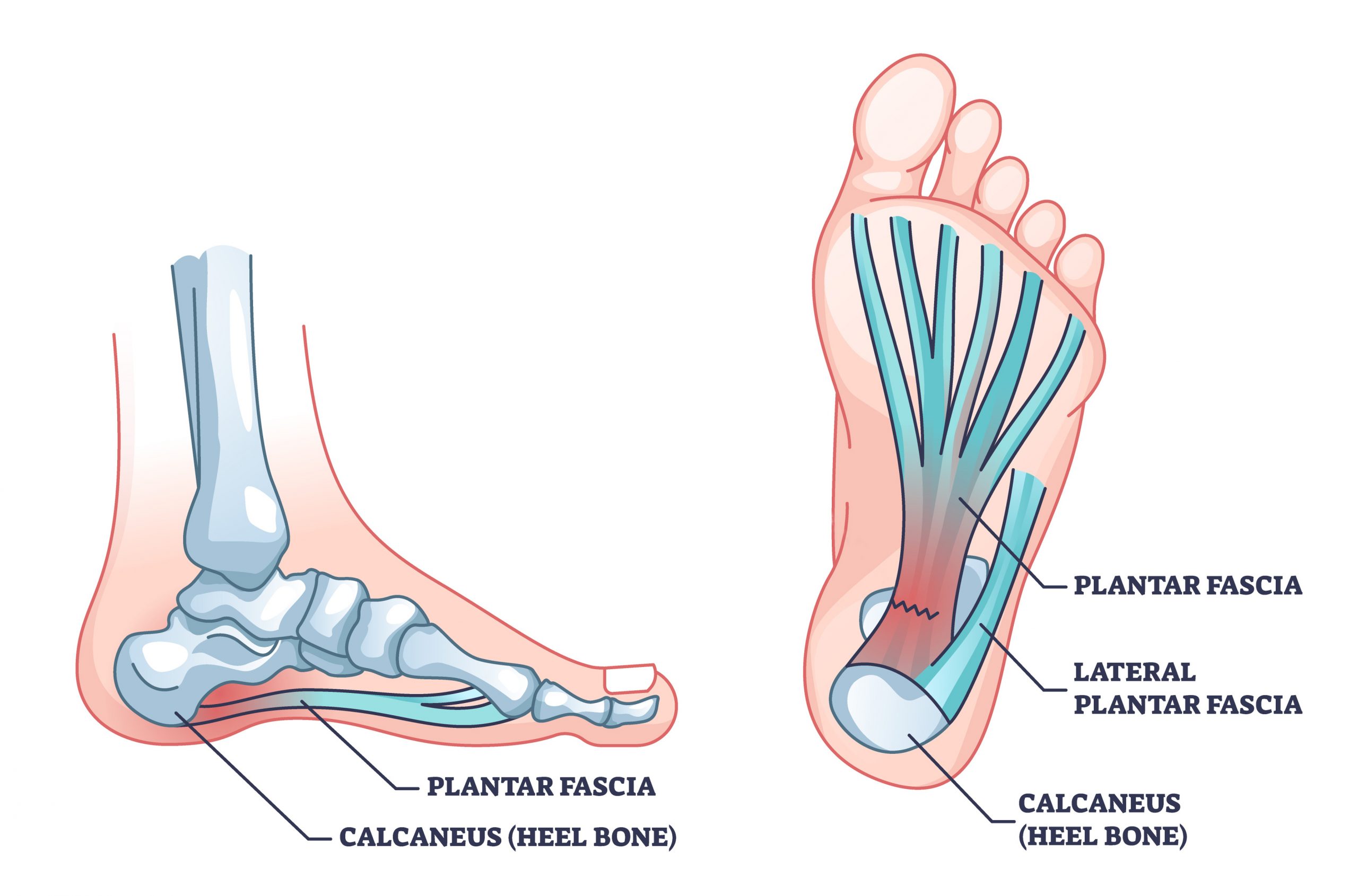
While acute inflammation and injury can occur, generally non-inflammatory thickening and degeneration of the plantar fascia are the problem. Heel spurs may be present, but rarely do they have any correlation to the presence of pain on the bottom of the heel. Plantar heel spurs are enthesophytes, a disorder of the plantar fascia’s attachment to the heel bone (calcaneus). Enthesophytes are caused by chronic degeneration and stress of the plantar fascia tissue at its attachment site on the periosteum of the heel bone.
The plantar fascia is a thick fibrous collagen band on the bottom of the foot connecting the heel to the forefoot. It helps support and stabilize the arch and facilitate shock absorption during gait. Pain is most often due to overuse. Overuse can be caused by changes in physical activity or exercise, exercise surface, and footwear.
What causes plantar fasciopathy?
Pain is most often due to overuse. Risk factors include:
• Increased physical activity on the foot, such as running, jumping, prolonged walking or standing.
• Wearing shoes which are worn out and no longer protect the foot.
• The weekend warrior, asymmetric activity distribution throughout the week or from week to week.
• Obesity
• Weight gain, such as with pregnancy, places extra stress and strain on the plantar fascia.
• Connective tissue disorders
• Age. Over time fascial tissue becomes less elastic and more susceptible to injury.
Symptoms
Common signs and symptoms of plantar fasciopathy are:
• Pain and stiffness on first weight bearing on the foot after rest or in the morning.
• Pain and stiffness during or after exercise or physical activity.
• Pain on the bottom of the heel or arch.
• Pain with activity.
• Limping.
• Swelling.
Treatment
• Rest
• Activity modification
• Ice
• NSAIDs, such as ibuprofen (Motrin), naproxen (Alleve), or topical diclofenac (Voltaren, Flector)
• New supportive shoes. Regular replacement of shoes is recommended.
• Taping
• Arch supports or custom orthotics
• Stretching and foot strengthening exercises (check out the rehab page)
• Night splints. These are a good idea in theory and help passively stretch the lower leg. In reality however most people do not tolerate night splints well, finding them uncomfortable and difficult to sleep with.
• Cortisone injection
• Shockwave therapy (ESWT)
• Manual and physical therapy
• Immobilization
• Surgery
Plantar fasciopathy is generally an overuse injury. Overuse leads to prolonged and excessive tension on the fascia. Fortunately, surgery is generally not necessary. Over 90% of patients will get better without surgery. Surgery, when indicated, involves partial incision of the plantar fascia and possibly incision of the gastrocnemius fascia. Both of these procedures may be done with either an open incision or minimal incision endoscopic approach.
Plantar fasciopathy typically responds best when taking a wholistic multi-factorial approach and throwing the kitchen sink at it, rather than focusing on only one or two parts of the problem. Rest, ice, supportive shoes, and arch supports or custom orthotics are generally helpful. Rehab and strengthening exercises for the foot and stretching exercises (check out the rehab page) are recommended. Steroid injections can be helpful when pain is significant.
Prevention
With the benefit of hindsight, prevention is the best treatment.
• Regularly replace shoes. How often shoes need to be replaced is dependent on activity level and the shoe itself. Most people do not replace shoes often enough.
• Use arch supports or custom orthotics
• Stretch and perform foot strengthening exercises (check out the rehab page)
• Avoid overuse. Gradually increase physical activity by no more than 10% per week.
Schedule an appointment now for an evaluation and discussion of your feet and their treatment options if:
• Pain and difficulty are not going away
• It is limiting physical activity
• It is affecting your quality of life
• You are interested in custom orthotics
• Or you have any questions
Contents
Overview
Causes
Symptoms
Treatment
Prevention
Call NOW for an Appointment: